
The short answer
- Cool-season grass (fescue, bluegrass, ryegrass): sow from late summer to early fall. Warm-season grass (Bermuda, zoysia, centipede): sow in late spring once the soil reaches 65°F.
- Seed rate depends on the grass: tall fescue about 6–8 lb per 1,000 sq ft, Kentucky bluegrass 2–3 lb, perennial ryegrass 7–9 lb for a new lawn. Overseeding uses about half.
- Measure the lawn first: pounds of seed = area in sq ft ÷ 1,000 × the rate.
- Rake the seed in about ¼ in deep for good soil contact, then keep the top inch of soil moist until it sprouts.
When is the best time to plant grass seed?
The best time to plant grass seed is late summer to early fall for cool-season grasses and late spring to early summer for warm-season grasses. Seed sprouts fastest in warm soil, and young grass grows best in the weather its type likes. Planting grass seed in fall gives cool-season lawns two cool seasons to root before their first summer, with fewer weeds competing.
| Grass type | Grasses | Best time to sow | Soil temperature |
|---|---|---|---|
| Cool-season | Tall fescue, Kentucky bluegrass, perennial ryegrass, fine fescue | Late summer to early fall; early spring is second best | About 50–65°F |
| Warm-season | Bermudagrass, zoysiagrass, centipedegrass | Late spring to early summer | 65°F and warmer |
Cool-season grasses are the lawns of the northern half of the US and the transition zone. Warm-season grasses cover the South. Planting grass seed in spring works for cool-season lawns too, but the seedlings meet summer heat and crabgrass before they have deep roots, so water them closely through the first summer.
How do you prepare soil for grass seed?
You prepare soil for grass seed by clearing it, loosening it, leveling it and firming it, so the seed lands on loose, even soil it can root into. On bare ground for a new lawn:
- Test the soil. A soil test from your county extension office tells you the pH and the lime or fertilizer the soil needs. Most lawn grasses do best between pH 6.0 and 7.0.
- Clear it. Remove weeds, stones, roots and building debris.
- Loosen the top 4–6 in. Till or dig it, and mix in compost where the soil is heavy clay or poor.
- Level it. Rake out humps and hollows, with the surface sloping gently away from the house.
- Firm it. Roll or water the soil so it settles. A footprint should sink no more than about ½ in.
Spread a starter fertilizer at the rate on its bag, or as the soil test says, and rake it into the top inch just before you sow.
How much grass seed do you need per 1,000 sq ft?
The grass seed you need per 1,000 sq ft depends on the grass: about 6–8 lb for tall fescue, 2–3 lb for Kentucky bluegrass and 7–9 lb for perennial ryegrass on a new lawn. Small seeds go further, which is why bluegrass needs a fraction of the weight of fescue. Overseeding a thin lawn uses about half the new-lawn rate.
| Grass | New lawn | Overseeding | Days to sprout |
|---|---|---|---|
| Tall fescue | 6–8 lb | 3–4 lb | 7–14 |
| Kentucky bluegrass | 2–3 lb | 1–1.5 lb | 14–30 |
| Perennial ryegrass | 7–9 lb | 3.5–4.5 lb | 5–10 |
| Fine fescue | 3–5 lb | 1.5–2.5 lb | 7–14 |
| Bermudagrass, hulled | 1–2 lb | 0.5–1 lb | 7–14 |
| Zoysiagrass | 1–2 lb | 0.5–1 lb | 14–21 |
| Centipedegrass | 0.25–0.5 lb | 0.125–0.25 lb | 14–21 |
Seed mixes print their own rate on the bag; follow it, since it is set for that blend. Rates from extension services vary a little from state to state, so check your state’s extension guide for the grass you choose.
How much grass seed do you need for your lawn?
You need the lawn’s area in square feet divided by 1,000, times the seed rate: pounds of seed = area ÷ 1,000 × rate. The rate is the easy part, because it is on the bag. The area is where most estimates go wrong, so measure only the ground you will seed and leave out the house, the drive, paths and planting beds.
A worked example: a 5,000 sq ft lawn of tall fescue at 7 lb per 1,000 sq ft needs 5,000 ÷ 1,000 × 7 = 35 lb of seed. Buy whole bags and keep any left over for patching bare spots.
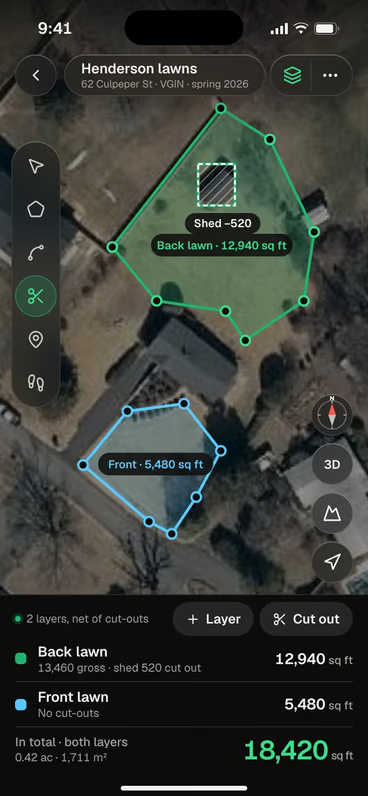
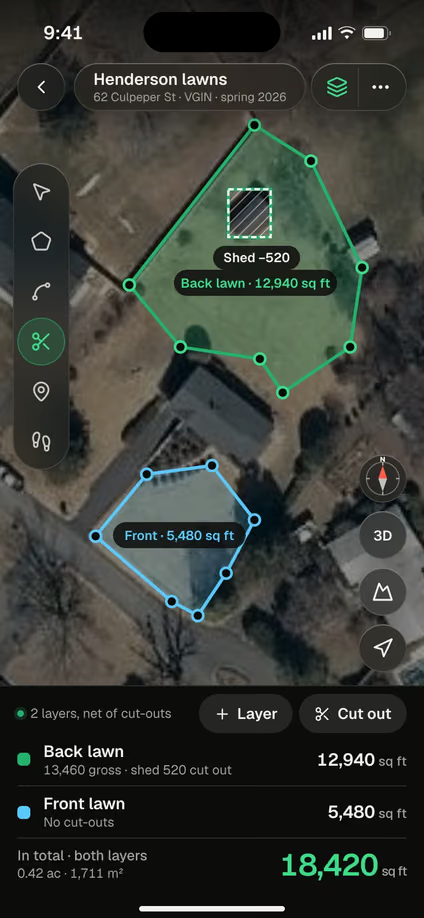
The back lawn is 12,940 sq ft with the shed cut out and the front lawn is 5,480 sq ft. At 7 lb of tall fescue per 1,000 sq ft, 18,420 sq ft needs 129 lb of seed for a new lawn, or about 65 lb to overseed at half the rate.
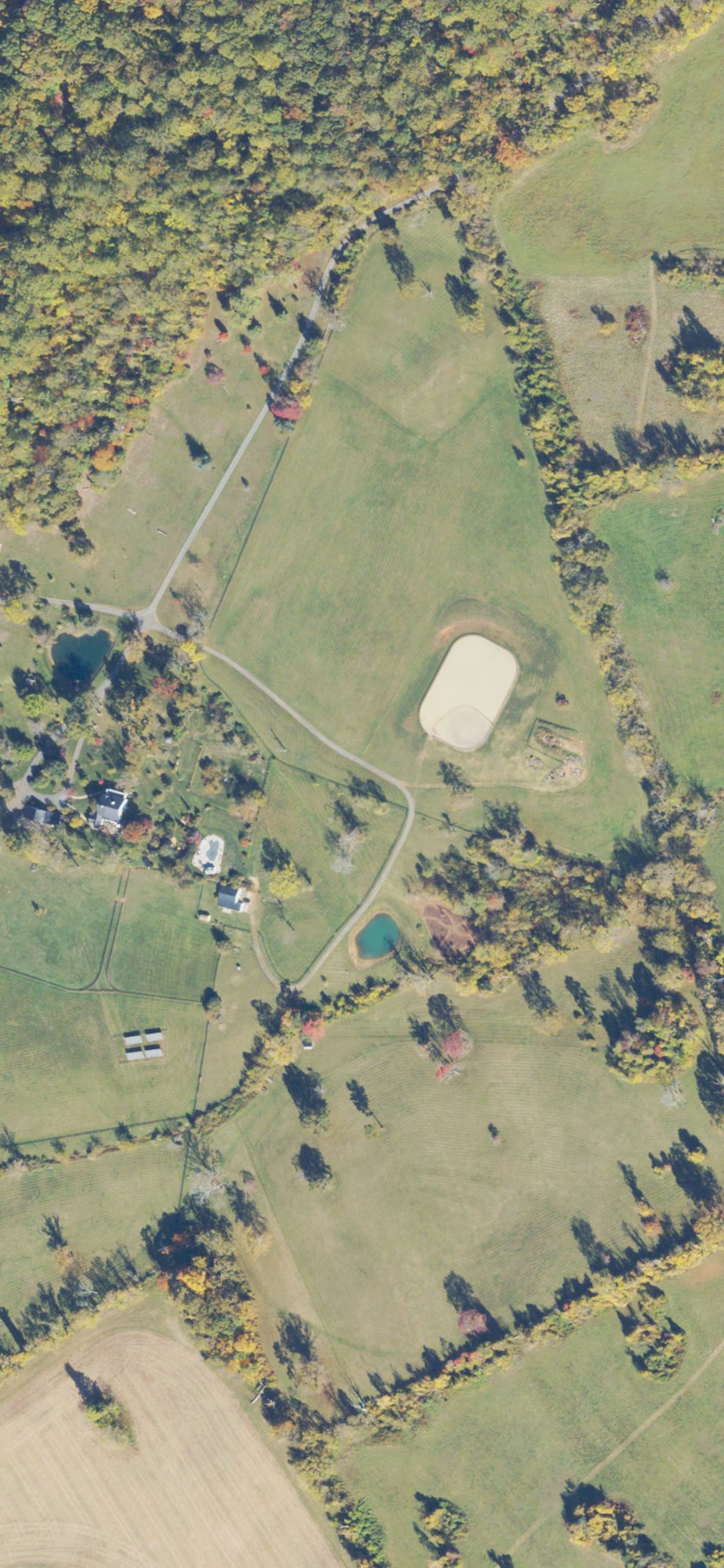
To measure a lawn, outline it on a satellite map and cut out what isn’t grass, or measure it with a tape and add up the rectangles. How to measure a yard covers both, and the grass seed calculator turns the area into pounds for each grass type.
 Measure the lawn before you buy seedOutline it in AreaPal, cut out the beds and the house, and read the area in square feet.

How do you plant grass seed step by step?
You plant grass seed by spreading it evenly in two directions, raking it in about ¼ in deep, rolling it and covering it lightly. Seed left on top of the soil dries out or feeds birds; seed buried deeper than about ½ in may never reach the light.
- Split the seed in half. Set the spreader to the bag’s setting, spread half walking north to south and the other half walking east to west. This avoids stripes.
- Rake it in. Drag a leaf rake lightly over the surface so most seed sits about ¼ in deep. Bermudagrass and bluegrass seed are tiny; barely cover them.
- Roll it. A half-full lawn roller presses seed into firm contact with the soil.
- Cover it. Spread a thin layer of clean, weed-free straw, thin enough to see the soil through it, to hold moisture and shade the seed.
Use a drop spreader along edges and beds so seed doesn’t land where you don’t want grass. On a slope, erosion-control blanket holds seed and soil in place in heavy rain.
How do you plant grass seed on an existing lawn?
You plant grass seed on an existing lawn, called overseeding, by mowing short, opening up the soil and spreading seed at about half the new-lawn rate. The seed needs to reach soil, not sit on top of the old grass and thatch.
- Mow the lawn to about 2 in and bag the clippings.
- Core aerate, or rake hard with a dethatching rake, so there are open holes and loose soil between the old grass.
- Spread the seed at the overseeding rate, such as 3–4 lb of tall fescue per 1,000 sq ft, in two directions.
- Drag a rake or a mat over the lawn to work seed into the holes, then water.
Overseed cool-season lawns in early fall, the same window as a new lawn. If you used a weed killer or crabgrass preventer, check the label: many stop grass seed from sprouting for weeks after they go down.
How often should you water new grass seed?
You should water new grass seed lightly once or twice a day, enough to keep the top inch of soil moist, until it sprouts. Seed that dries out after it has started to swell dies, so the first two to three weeks matter most. In hot, windy weather a third short watering may be needed.
| Stage | How often | How much |
|---|---|---|
| Sowing to sprouting | Once or twice a day | Keep the top inch moist, no puddles |
| Sprouted, before first mowing | Every day or two | Wet the top 2–3 in |
| After two or three mowings | Once or twice a week | About 1 in of water a week, rain included |
Water early in the morning so the grass dries during the day. If water runs off or puddles, stop, let it soak in and water again; a hard stream washes seed into piles. Keep foot traffic off the new lawn until it has been mowed a few times.
Questions
How do you keep birds from eating grass seed?
Rake the seed in about ¼ in deep so little is left on the surface, then cover it with a thin layer of clean straw or lay bird netting over small areas until it sprouts. Sowing at the full rate also leaves enough seed for a good stand even if birds take some.
Can you just throw grass seed on the lawn?
Seed scattered on hard ground or thick thatch mostly dries out or feeds birds. It needs contact with loose, moist soil, so mow short, rake or aerate first, and rake the seed in after spreading.
How do you plant Bermuda grass seed?
Sow hulled Bermudagrass seed in late spring or early summer, once the soil is at least 65°F, at 1–2 lb per 1,000 sq ft. Rake it in no deeper than ¼ in and keep it moist; it usually sprouts in one to two weeks in warm soil.
When can you mow new grass?
Mow new grass once it is about a third taller than the height you plan to keep it, typically 3–4 in for tall fescue. Use a sharp blade and mow when the soil is dry enough not to rut.
Sources: Seeding rates, timing, soil temperatures and germination times: Purdue University Extension (Turfgrass Science, establishing lawns from seed), University of Georgia Cooperative Extension (warm-season lawns) and NC State Extension TurfFiles. Unit conversion: NIST Handbook 44, Appendix C (1 lb per 1,000 sq ft is about 4.88 g/m²).

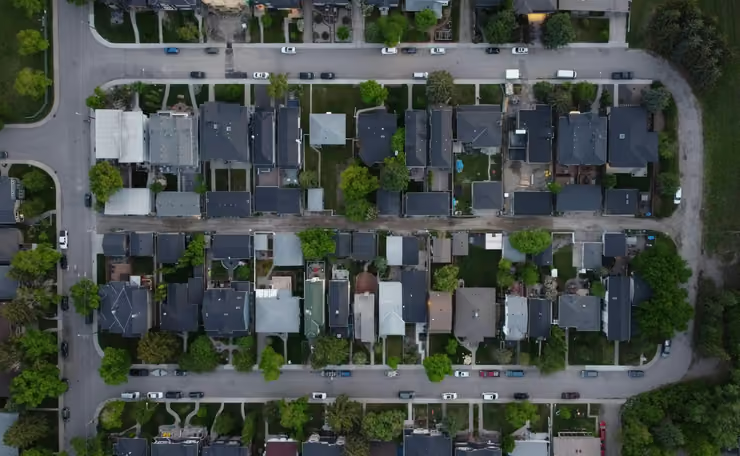
 Imagery USDA NAIP 2023
