
The short answer
- A standard 4 in parking lot line costs $0.20 to $0.30 per linear foot (OneCrew, 2026).
- Re-striping a 25 to 50 space lot runs $400 to $800 (OneCrew, 2026).
- Each 90° stall adds one 18 ft line, so 100 stalls are about 1,800 ft of line.
- Accessible stalls, arrows, stencils and fire lanes are priced on top of the lines.
How much does line striping cost per foot?
Line striping costs $0.20 to $0.30 per linear foot for a standard 4 in parking lot line, according to OneCrew (2026). That is the newest figure we could check, and it covers the painted line itself. Wider lines, such as fire lanes and stop bars, use more paint per foot and cost more.
| Job | Typical cost | Source |
|---|---|---|
| standard 4-inch line4 in line; re-striping a 25–50 space lot runs $400–$800 | $0.20–$0.30 per linear foot | OneCrew, January 2026 |
What a contractor charges the customer. US, read November 2026. Not AreaPal's price.
Per-stall and per-stencil prices are common in striping quotes, but we could not find a dated source for them, so they have no figure here.
How much does it cost to restripe a parking lot?
Re-striping a parking lot of 25 to 50 spaces runs $400 to $800, according to OneCrew (2026). A restripe follows the old lines, so the crew paints over what is already there. A new layout after paving, or after a sealcoat that hides the old lines, takes measuring and chalk lines first and is priced above a restripe.
A full quote usually lists the lines by the foot, then each accessible stall, arrow and stencil, then a charge to bring the crew and striper to the site.
How many feet of line does a parking lot have?
A parking lot has about 18 ft of line for every 90° stall, because each stall adds one line as deep as the stall. A row of 10 stalls has 11 lines, 198 ft. Fire lanes, crosswalks and stop bars are measured by the foot and added on.
| Lot | Feet of line, about | Traffic paint |
|---|---|---|
| One row of 10 stalls | 198 ft (60 m) | 1 gal |
| 50 stalls | 900 ft (274 m) | 3 gal |
| 100 stalls and 220 ft of fire lane | 2,020 ft (616 m) | 7 gal |
| 200 stalls | 3,600 ft (1,097 m) | 12 gal |
Paint is worked out at about 320 ft of 4 in line per gallon and rounded up to whole gallons. Angled stalls take more curb per stall, so fewer fit in the same row.
How many accessible stalls does a lot need?
A parking lot needs accessible stalls in proportion to its total, set by the 2010 ADA Standards: 1 for up to 25 stalls, 2 for 26 to 50, 4 for 76 to 100. At least one in six accessible stalls must be van accessible. Each one needs an access aisle and a symbol, so they are priced on their own lines.
| Total stalls | Accessible stalls |
|---|---|
| 1–25 | 1 |
| 26–50 | 2 |
| 51–75 | 3 |
| 76–100 | 4 |
| 101–150 | 5 |
| 151–200 | 6 |
What drives the cost of line striping?
The cost of line striping depends on the feet of line, whether it is a restripe or a new layout, and how many stencils and symbols the lot needs. The main drivers:
- Feet of line. More stalls and longer fire lanes mean more line at $0.20 to $0.30 a foot (OneCrew, 2026).
- Layout. A new layout needs measuring and chalk lines; a restripe follows the old ones.
- Stencils and symbols. Accessible stalls, arrows, words and stall numbers are priced per piece.
- Paint. Longer-lasting materials cost more than standard traffic paint.
- Surface and timing. Cleaning or sealcoating first, and night or weekend work to keep a lot open, add to the price.
- Minimum and travel. Small lots often pay a minimum charge for bringing the crew and striper out.
How do you estimate striping for your own lot?
You estimate line striping by counting the stalls in each row, turning them into feet of line, and multiplying by the per-foot range. Then add stencils, accessible stalls and the minimum.
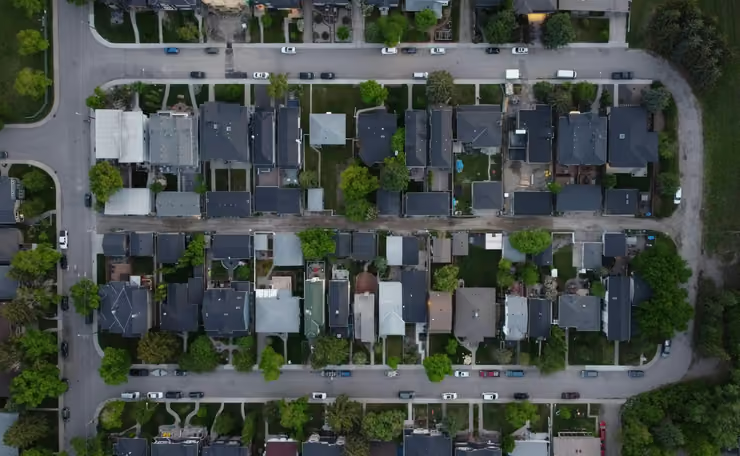
- Measure each row of stalls on a satellite map or with a wheel, and count the stalls.
- Feet of line = (stalls + 1) × 18 ft for each row of 90° stalls.
- Add fire lanes, crosswalks and stop bars by the foot.
- Multiply the total by $0.20 and by $0.30 (OneCrew, 2026), then add each stencil and accessible stall.
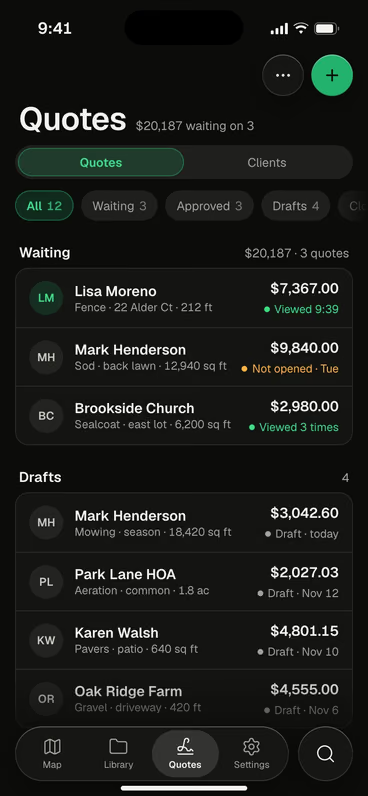
Brookside Church’s east lot measures 6,200 sq ft. The example sealcoat quote is $2,980.00, and the church has viewed it 3 times; the lot is restriped once the sealer dries.
The asphalt and sealcoating calculator covers the lot surface before it is striped, and the asphalt driveway cost guide gives sealcoating prices. Striping crews can see how stalls, paint and stencils are counted on the line striping contractors page.
 Count the stalls, then quote the linesMeasure each row on the map in AreaPal and send a striping quote with the sealcoat as an option.

Questions
How much does line striping cost per stall?
We could not check a dated source for a per-stall price, so this guide works from the linear foot. A standard stall adds one 18 ft line, so multiply 18 ft by $0.20 and by $0.30 (OneCrew, 2026) for the line, then add stencils and the contractor's minimum.
Is a parking lot restriped after sealcoating?
Yes. Sealcoat covers the old lines, so the lot is restriped once the sealer has dried. Contractors often quote sealcoat and striping together so the lot is closed only once.
How wide is a parking stall?
Usually 8.5 to 9 ft wide and 18 ft deep, set by the local code. Under the 2010 ADA Standards an accessible car stall is 96 in (2.44 m) wide with a 60 in (1.52 m) access aisle.
How much paint does a parking lot take?
A gallon of traffic paint lays about 320 ft of 4 in line at 15 mils wet, or about 214 ft of 6 in line. Divide the feet of line by 320 for gallons; rough asphalt and a second coat take more.
Sources: Typical cost, what a striping contractor charges the customer (US): OneCrew, parking lot striping bidding guide (January 7, 2026). Read November 2026. Accessible stall counts and sizes: 2010 ADA Standards for Accessible Design §208.2 and §502. Paint coverage: 1 US gallon = 231 cu in (NIST Handbook 44), spread 4 in wide at 15 mils wet. The Brookside Church quote is AreaPal's example quote, not a market price.
 Imagery USDA NAIP 2023
