Concrete estimating software.
Yards, rebar and the quote.
Concrete estimating software turns a slab into cubic yards: length × width × depth in feet, divided by 27, plus 5 to 10% waste. A 20 × 24 ft slab 4 in thick needs 5.93 cu yd (4.53 m³), so you order 6.25 cu yd. Add base, forms, rebar and finishing labor, then send the quote.
By the AreaPal team · Updated
- Or bags of dry mix
- 59 bags
- Concrete with 5% waste
- 35 ft³
- Wire mesh, 5 × 10 ft sheets
- 3 sheets
- Gravel base, 4 in
- 2.5 tons
- Slab area
- 100 sq ft
Includes 5% waste. Bag yield: 0.0075 ft³ per lb of dry mix. Same math as the AreaPal app's concrete estimate.
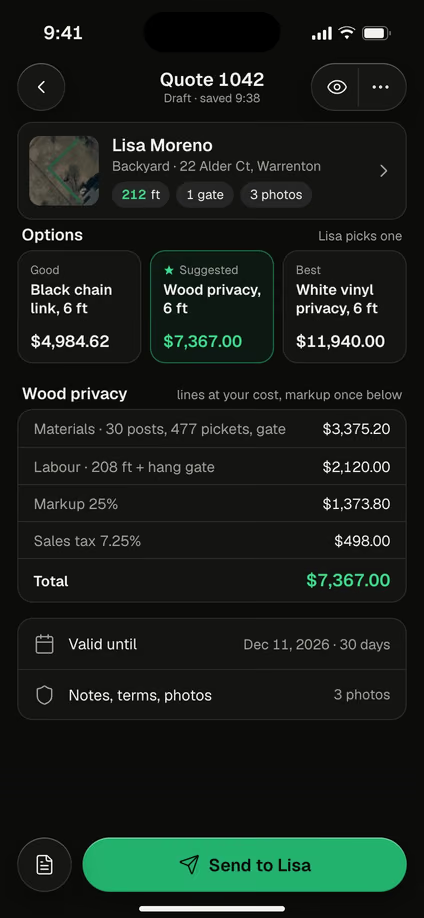
From the concrete job to a signed quote.
Search the address and draw the line, the lawn, the drive or the roof on the satellite map.
Materials with waste, labor, markup and tax, from your own price book.
Up to three options with your logo. Send the link from your own phone.
Your customer picks an option and signs with a finger. No app, no account.
Concrete estimates, step by step.
Example: a 20 × 24 ft slab, 4 in thick
6.25 cu yd to order. Here is what the estimate counts, line by line. Open the concrete calculator to change the numbers.
| Item | Note | Qty |
|---|---|---|
| Ready-mix concrete | 5.93 cu yd + 5% waste | 6.25 cu yd |
| Or 80 lb bags | 0.6 cu ft each | 280 |
| Rebar, #4 | 18 in grid both ways, +10% laps | 744 ft |
| Gravel base, 4 in | +15% for compaction | 9.5 t |
| Form boards, 2×4 | around the edge | 88 ft |
| Control joints | two saw cuts | 44 ft |
Don’t know the length or the area? Measure it on the satellite map in AreaPal.
How many yards of concrete do I need?
The yards of concrete you need are length × width × thickness in feet, divided by 27, plus 5 to 10% for waste and uneven subgrade. A 4 in slab takes 1.23 cu yd for every 100 sq ft.
Turn inches into feet first: 4 in is 0.333 ft, 6 in is 0.5 ft. Ready-mix is ordered in quarter yards, so round up.
| Slab | 4 in thick | 5 in thick | 6 in thick |
|---|---|---|---|
| 10 × 10 ft | 1.23 | 1.54 | 1.85 |
| 12 × 12 ft | 1.78 | 2.22 | 2.67 |
| 10 × 20 ft | 2.47 | 3.09 | 3.70 |
| 20 × 20 ft | 4.94 | 6.17 | 7.41 |
| 20 × 24 ft | 5.93 | 7.41 | 8.89 |
| 24 × 24 ft | 7.11 | 8.89 | 10.67 |
How many bags of concrete make a yard?
A cubic yard of concrete takes 45 bags of 80 lb, 60 bags of 60 lb or 90 bags of 40 lb premix, because the bags yield about 0.60, 0.45 and 0.30 cu ft each.
Bags suit small pours such as pads, steps and post holes. For a full slab, ready-mix is usually faster; ask the plant about its fee for a load under its minimum.
| Bag | Yield | Bags per cu yd | Bags for 10 × 10 ft |
|---|---|---|---|
| 80 lb | 0.60 cu ft | 45 | 56 |
| 60 lb | 0.45 cu ft | 60 | 75 |
| 40 lb | 0.30 cu ft | 90 | 112 |
How thick should a concrete slab be?
A concrete slab for a patio, walk or garage floor is usually 4 in thick, and a driveway 4 to 6 in, thicker where trucks or RVs park.
Joints go every 2 to 3 times the thickness in feet: 8 to 12 ft apart on a 4 in slab. Use the plans when an engineer or the building department has set the thickness.
| Job | Thickness | Concrete per 100 sq ft |
|---|---|---|
| Walks, patios, shed pads | 4 in | 1.23 cu yd |
| Garage floor | 4 in | 1.23 cu yd |
| Driveway, cars | 4 to 5 in | 1.23 to 1.54 cu yd |
| Driveway, trucks or RVs | 6 in | 1.85 cu yd |
How do you estimate concrete footings?
Concrete footings are estimated like slabs: length × width × depth ÷ 27 for a continuous footing, and π × radius² × depth for each round pier or Sonotube, plus 5 to 10% waste.
Footing sizes come from the plans and the local code. Count the piers, multiply by the volume of one, and add the bags or yards to the same estimate as the slab.
| Footing | Concrete | 80 lb bags |
|---|---|---|
| Continuous, 16 × 8 in, per 100 ft | 3.29 cu yd | Ready-mix |
| Continuous, 20 × 10 in, per 100 ft | 5.14 cu yd | Ready-mix |
| Pier, 8 in tube, 4 ft deep | 1.40 cu ft | 2.3 |
| Pier, 10 in tube, 4 ft deep | 2.18 cu ft | 3.6 |
| Pier, 12 in tube, 4 ft deep | 3.14 cu ft | 5.2 |
How do you price a concrete slab job?
You price a concrete slab as delivered concrete, base, forms and steel, plus finishing labor by the square foot, plus any pump or short-load fee, then markup and tax.
Measure the slab once and every line follows from it. The 20 × 24 ft example works out like this.
| Line | How it’s counted | Example |
|---|---|---|
| Concrete | Cubic yards with waste | 6.25 cu yd |
| Gravel base | Tons, with compaction | 9.5 t |
| Rebar or mesh | Linear feet or sheets | 744 ft |
| Forms | Perimeter | 88 ft |
| Place and finish | Square feet | 480 sq ft |
| Pump or short-load fee | Per pour | If the job needs it |
| Markup and tax | Percent of the subtotal | Your rates |
How much does a concrete slab cost per square foot?
A concrete slab costs the customer $4.34 to $7.73 per square foot installed (LawnStarter, 2026); This Old House (2026) gives $4 to $8 per square foot, and ready-mix concrete delivered runs $175 to $195 per cubic yard (Fixr, 2025).
| Job | Typical cost | Source |
|---|---|---|
| concrete slab installedInstalled; average $6.60 per sq ft | $4.34–$7.73 per sq ft | LawnStarter, November 2026 |
| concrete slabTypical slab range | $4–$8 per sq ft | This Old House, March 2026 |
| concrete per cubic yardConcrete only; delivery not stated | $113–$126 per cubic yard | This Old House, March 2026 |
| ready-mix concrete deliveredDelivered; $125–$133 per cu yd without delivery, plus a short-load fee of $15–$17 per cu yd on small orders | $175–$195 per cubic yard | Fixr, January 2025 |
What a contractor charges the customer. US, read November 2026. Not AreaPal's price.
Sources: Quikrete product data (80, 60 and 40 lb premix yields 0.60, 0.45 and 0.30 cu ft); Portland Cement Association guidance on slab thickness and joint spacing (24 to 36 times the thickness); 1 cu yd = 27 cu ft = 0.765 m³ (NIST Handbook 44). Typical costs, what a contractor charges the customer: LawnStarter concrete slab cost (November 2026), This Old House concrete slab cost (March 2026), Fixr concrete delivery cost (January 2025).
Slabs, drives and footings. Each one figured by the yard.
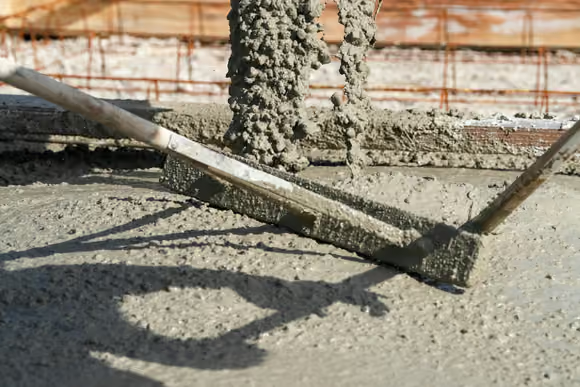
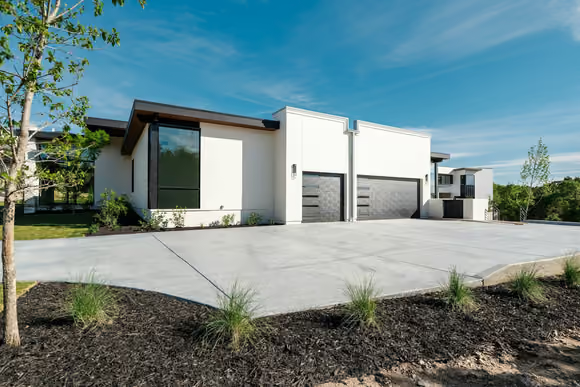
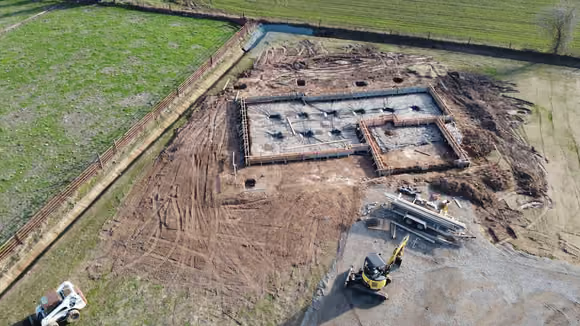
Photos by Markus Kammermann, Salvo Media LLC, Scott Blake, Linda Gerbec on Unsplash.
Every quote, tracked to a yes.
Quotes with their status, options your customer can compare, and every client with their areas.
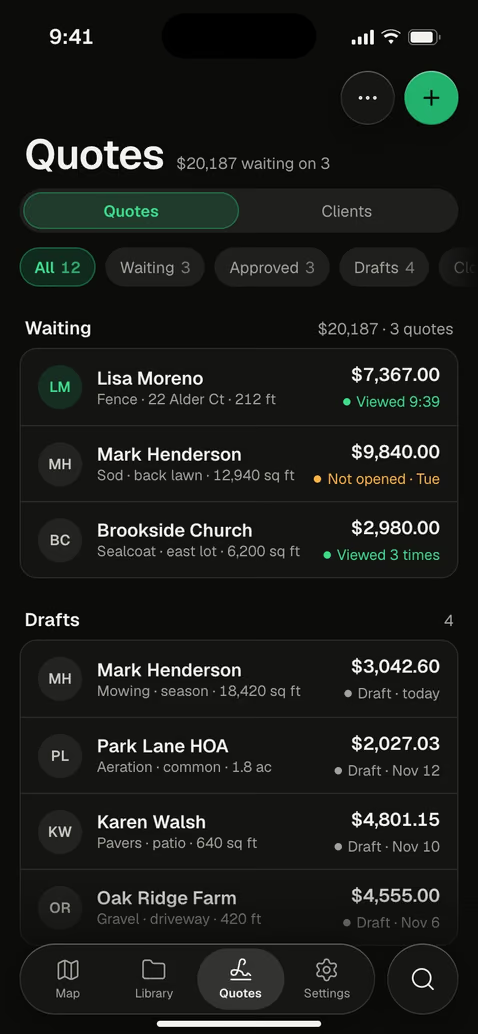
Sent, viewed, approved, declined or expired, with a push when a customer opens one.
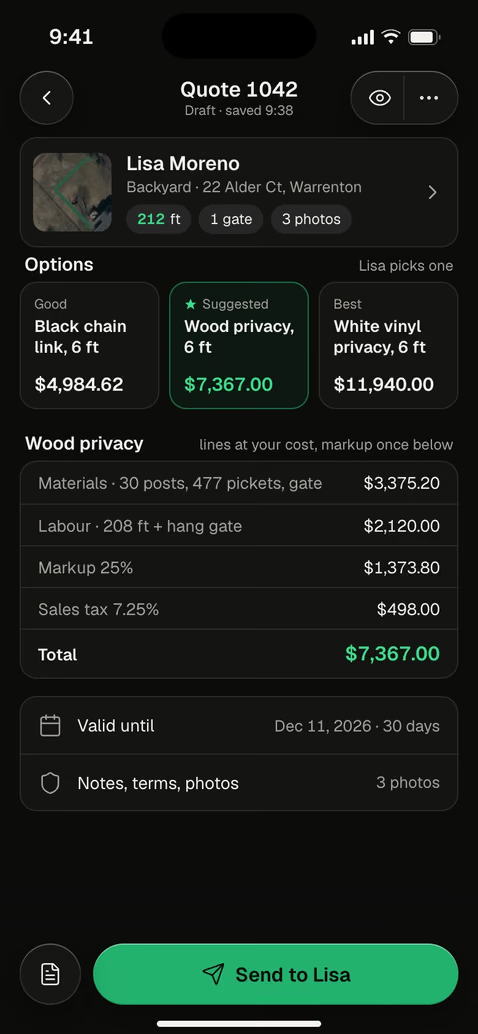
Up to three options on one quote, with your logo, terms and a valid-until date.
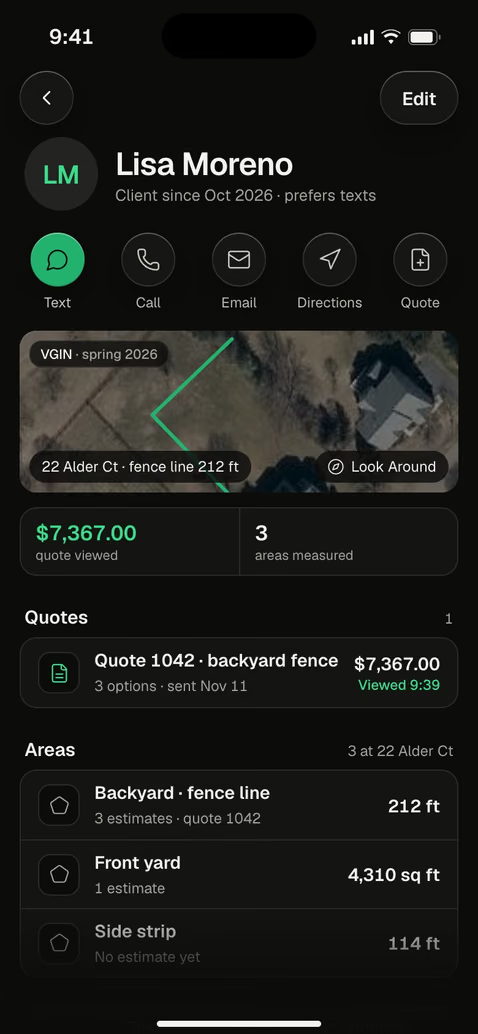
Every customer with the areas you measured and the quotes they have had.
Concrete questions, answered.
How do you install a concrete slab?
Dig out and compact the subgrade, lay and compact about 4 in of gravel, then set forms and rebar or mesh. Pour, screed, float and edge the slab, cut the control joints and keep it moist while it cures.
What is concrete takeoff software?
Takeoff software measures the areas and lengths on a job and turns them into quantities: yards, bags, rebar and forms. AreaPal does the takeoff for flatwork from the satellite map, prices it from your book and builds the quote.
Is there a concrete calculator app that also sends quotes?
AreaPal works out yards, bags, rebar and base for slabs and walls, with the bag sizes you buy. The same estimate becomes a quote your customer approves and signs in the browser, on iPhone, iPad or Mac.
How much concrete does a 10 × 10 slab need?
A 10 × 10 ft slab 4 in thick needs 1.23 cu yd (33.3 cu ft) before waste. That is 56 bags of 80 lb premix.
Can I quote concrete sealing with the same app?
Yes, as a job priced per square foot. Measure the drive or patio, set your rate and add it to the quote as its own line or as an option.
Measure the slab.
Send the quote from the truck.